Behind the Midway: The Airtable Livestock Tracker and Other Secrets of the County Fair
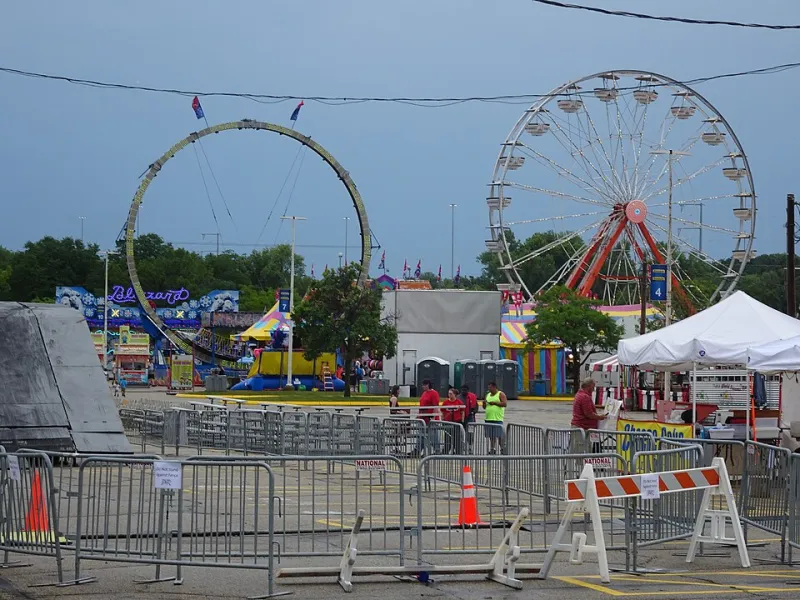
Photo: Corey Coyle, CC BY 3.0, via Wikimedia Commons
There's a moment at every county fair when things could fall apart. The pie judging, the goat show, the 4-H check-in — thousands of moving parts, most of them run by people who also have day jobs. What nobody tells you is how much of it now runs on no-code tools.
I spent last Saturday at the fairgrounds with a notebook and a simple question for whoever looked busy: "How are you tracking that?"
The Livestock Board That Isn't a Board Anymore
First stop: the cattle barn. For decades, the show schedule lived on a whiteboard and a prayer. Not anymore. A 4-H dad named Dale — retired ag teacher, self-described "not a computer guy" — showed me an Airtable base on his phone that tracks every animal, exhibitor, class, and ribbon.
"Took me two winters," he said. "YouTube mostly."
The base feeds a shared view that the barn announcer reads from and parents check from the parking lot. When a class runs late, everyone knows within minutes. That used to take a kid running through the barns with a clipboard.
The Ticket Booth Runs on Zapier
At the admission gate, the story repeated. Online presale tickets come in through a form, and a Zap pings the volunteer coordinator whenever sales pass certain thresholds — so she knows when to schedule more scanners. Same-day sales reconcile against a Google Sheet that, until three years ago, was a shoebox of cash and a legal pad.
The fair board member who set it up shrugged when I asked if she considered hiring a developer. "For what? We'd spend the whole rodeo budget."
Volunteer Scheduling, Small-Town Edition
The vendor and volunteer scheduling was arguably the most impressive build: a Softr front end on an Airtable base, with shift sign-ups, text reminders, and a no-show log. Total cost: whatever the fair already paid for the underlying free plans. Total build time: a few evenings, plus one very long night before opening.
When It Breaks at the Pie Judging
Here's the part worth chewing on. Saturday afternoon, the judging results feed — a Zap that pushes placings to the fair's website — silently failed. A renamed column in the base broke the mapping. Nobody noticed for two hours, and families refreshing the site saw nothing.
The fix took four minutes once someone knew where to look. The hard part was diagnosis: no logging, no alert, one person who knew the setup, and that person was elbow-deep in a bread oven.
It's the same lesson we keep hitting in this newsletter: no-code makes building the system easy and maintaining it the actual job. If you build something your whole town relies on, document it, add a simple failure alert, and tell a second person where the pipes are.
The Invisible Infrastructure
Across the fairgrounds, I counted at least nine distinct no-code or low-code builds: livestock tracking, ticketing, volunteer scheduling, judging results, vendor payments, auction bid logging, lost-and-found, camping reservations, and a QR-code scavenger hunt the FFA kids made.
None of it was branded. None of it was on a conference stage. It was just neighbors solving problems with tools that finally meet them where they are — and mostly holding up, even on pie day.