Dugout Dispatch: How One Baseball Mom Became the Most Important Technologist in the League
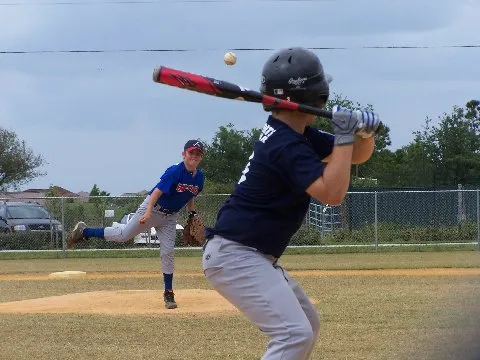
Photo: Kathy, CC BY 2.0, via Wikimedia Commons
Every spring, in towns across America, the same ritual plays out: a chain-link fence, a folding chair, a parent with a clipboard. And behind every one of those clipboards is usually someone like Dana Whitfield — a volunteer who said yes to one small job and watched it multiply.
For Dana, a marketing coordinator in Round Rock, Texas, the job was scorekeeping for her son's Little League team. It quickly became something else entirely.
The Paper Problem
Before Dana got involved, the league ran on what she calls "the three-ring binder era." Paper rosters photocopied at the office supply store. A phone tree that died somewhere around the fourth call. A master spreadsheet — owned by exactly one board member — that lived on a laptop that may or may not have backed up.
"Every rainout was a crisis," Dana told us. "Coaches would text the wrong group. Parents would show up to a field that was underwater. And the schedule changes? Those went out by email, which means about 60 percent of parents saw them in time."
The breaking point came in April, when a rescheduled playoff bracket resulted in two teams showing up to the same field at the same time — and a third showing up to the wrong park entirely. Dana went home that night and opened a browser tab she'd been saving: Glide.
Building the League in a Weekend
Dana's stack is now the stuff of local legend, at least among the parents who know what's under the hood:
- Airtable as the single source of truth — teams, players, coaches, fields, and a schedule table linked to all of the above
- Glide as the front end, giving coaches and parents a clean mobile app without anyone installing anything weird
- Zapier for the glue: schedule changes trigger text alerts, roster updates sync to team rosters, and game results auto-post to the league standings page
Total build time, she says, was about two weekends. Total cost: under $50 a month, most of which she initially covered herself.
"I didn't ask permission at first," she admits. "I built a version for my son's team, showed the coaches, and they wouldn't give it back. That was my pitch to the board, basically — here's what you're already using."
The Politics of a Better Spreadsheet
Here's the part no tutorial covers: rolling out software to a volunteer organization is a political campaign, not a product launch.
The league board — six volunteers, several of whom had run things the old way for a decade — had questions. Who owns the data? What happens when Dana's kid ages out? Is this another subscription they'd have to fundraise for?
Dana's answers became a de facto governance doc: she trained a co-admin, wrote a one-page handoff guide, and moved billing onto the league's card. The phone tree, for the record, was not mourned.
The bigger challenge was the 30 coaches. Some loved the app immediately. Others kept texting game results to Dana personally, which she handled the way experienced builders always do — by making the wrong way harder than the right way. Score reporting now happens inside the app, and it takes less time than a text.
The Moment It Became Mission-Critical
The turning point came at midseason, when the city's parks department closed three fields for emergency maintenance with 48 hours' notice. Dana rescheduled 40 games from her kitchen table in an evening. Every parent got a push notification before most coaches even saw the city's email.
"That's when the board stopped calling it Dana's app," she says. "It was just 'the league app.' Which is exactly what I wanted — and also slightly terrifying."
She's right to feel the weight. Like a lot of volunteer-built systems, this one quietly became infrastructure. The league's insurance records live in that base now. So do background-check statuses and concussion-protocol acknowledgments. A browser tab is holding together compliance for 400 families.
What Other Volunteers Should Steal From This
Dana's advice for the parent-volunteer who's about to inherit a clipboard empire:
- Build for the coaches first. Parents will use whatever exists. Coaches are the adoption bottleneck.
- Recruit a co-owner before you need one. Bus factor applies to Little League too.
- Keep the board in the loop early. Surprise is the enemy of buy-in.
- Document the handoff. A shared doc explaining the Airtable structure took her an hour and bought the league years of continuity.
The season wraps up next month, and Dana's son has two years left in the league. After that? She's already been approached by the soccer club. And the swim team.
"I keep telling myself I'll hand it off," she laughs. "But honestly? Somebody's got to keep the standings straight."
Somewhere out there, a chain-link fence is waiting for its next builder.